

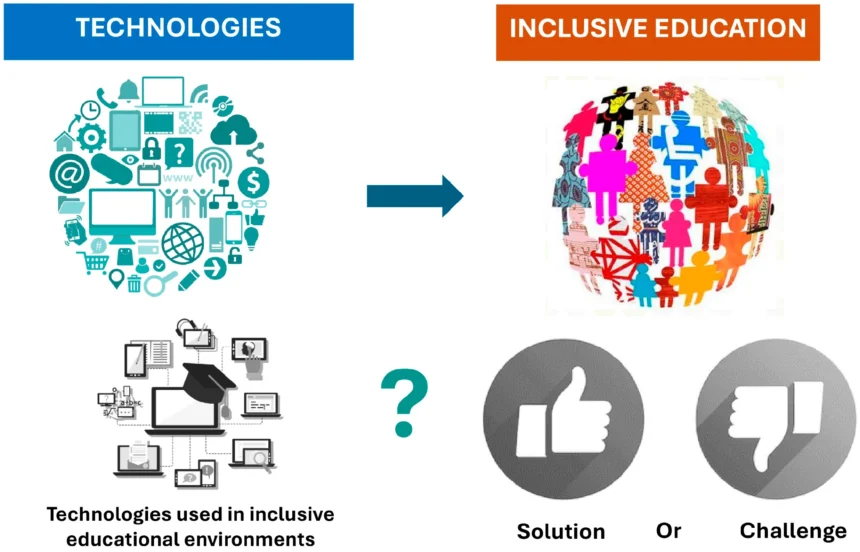
The modern classroom is no longer just a room with a chalkboard and rows of desks. It is a dynamic digital ecosystem where the boundaries of learning are constantly being expanded. For educators today the challenge is twofold. They must master the latest educational technology and simultaneously address the growing complexity of additional needs among their students. This convergence of tech and special education is not just a trend. It is the new standard of pedagogy.
- The Urgency of Tech Integration in Special Education
- Emerging Assistive Technologies Driving Change
- Artificial Intelligence and Personalized Learning
- Augmentative and Alternative Communication (AAC)
- Immersive Tech: VR and AR
- Professional Development and Certifications
- The Administrative Side: IEP Software and Compliance
- Funding the Revolution: Grants and Budgeting
- Overcoming the Digital Divide
- The Future of EdTech: What Lies Ahead?
- Conclusion
- Detailed Breakdown of Key Technologies for Educators
- Text-to-Speech (TTS) and Speech-to-Text (STT)
- Eye-Tracking Technology
- Smart Pens and Note-Taking Support
- The Role of Data Privacy in Special Education Tech
- Strategies for Inclusive Classroom Management
- The Importance of Parental Engagement
- Professional Growth: The Path to becoming an EdTech Specialist
- Final Thoughts on the “Schooled” Teacher
In this comprehensive guide we will explore how teachers are being “schooled” on new tech to support diverse learners. We will dive deep into the specific tools transforming special education, the certifications that are boosting teacher careers, and the strategies that define the inclusive classroom of 2025. Whether you are an administrator looking for enterprise solutions or a teacher seeking a masters in special education online, this article covers the critical intersection of technology and accessibility.
The Urgency of Tech Integration in Special Education
The phrase “teachers schooled on new tech” implies a necessary update to the professional skill set of educators. The days when a basic understanding of word processing was sufficient are gone. Today effective teaching requires a robust knowledge of adaptive software, learning management systems, and data analytics.
Statistics from recent educational surveys indicate that the number of students identified with specific learning disabilities is rising. This increase demands a more personalized approach to instruction. Fortunately the EdTech market has responded with sophisticated tools designed to level the playing field. However these tools are only as effective as the teachers who use them. This is where professional development and specialized training come into play.
Schools are now investing heavily in training programs that focus on assistive technology (AT). This investment is not merely about compliance with legal standards like the Individuals with Disabilities Education Act (IDEA). It is about maximizing student potential. When a teacher knows how to effectively deploy a text-to-speech engine or an eye-tracking device they unlock a world of possibilities for a student who might otherwise be left behind.
The Shift Toward Universal Design for Learning
A central concept in this educational revolution is Universal Design for Learning (UDL). UDL is a framework to improve and optimize teaching and learning for all people based on scientific insights into how humans learn.
New technology facilitates UDL by providing multiple means of engagement, representation, and action. For example instead of a single textbook for the entire class a digital curriculum might offer text, audio, and video options. It might allow students to demonstrate their understanding through a written essay, a voice recording, or a multimedia presentation.
Teachers are learning that technology is not an “add-on” for students with additional needs. It is the architecture of the learning environment itself. By designing lessons that are digitally inclusive from the start educators reduce the need for retrofitted accommodations later.
Emerging Assistive Technologies Driving Change
To truly understand how teachers are being upskilled we must look at the hardware and software they are learning to master. The market for special education software is booming, driven by innovations in artificial intelligence and sensory processing.
Artificial Intelligence and Personalized Learning
AI is the biggest game-changer in the current EdTech landscape. For students with additional needs AI offers a level of personalization that was previously impossible without one-on-one tutoring.
Predictive Analytics: AI platforms can now analyze student performance data in real time. They can identify patterns that a human teacher might miss such as a specific type of math problem that consistently causes anxiety or a reading passage that triggers disengagement. Teachers are being trained to interpret these analytics to intervene early and effectively.
Speech Recognition and Natural Language Processing: Tools like Dragon NaturallySpeaking and Google’s speech-to-text features are staples in the modern classroom. However newer AI iterations go further. They can understand dysarthric speech patterns (speech affected by motor control issues) better than ever before allowing students with cerebral palsy or other conditions to dictate their thoughts fluently.
Augmentative and Alternative Communication (AAC)
For non-verbal students AAC devices are their voice. Historically these were clunky expensive dedicated machines. Today AAC has largely migrated to tablet-based apps making them more accessible and less stigmatizing.
Teachers are being schooled on how to integrate AAC into the general curriculum. It is not enough for a student to have an iPad with Proloquo2Go; the teacher must know how to model its use, program new vocabulary related to the day’s lesson, and foster an environment where peer interaction is encouraged through the device.
Immersive Tech: VR and AR
Virtual Reality (VR) and Augmented Reality (AR) are proving to be powerful tools for students with autism spectrum disorder (ASD). VR allows teachers to create controlled, safe social scenarios. A student can practice ordering food at a cafeteria or navigating a busy hallway in a virtual simulation before attempting it in the real world.
AR is being used to overlay digital information onto the physical classroom. For a student with executive function challenges an AR app might highlight the specific drawer where supplies are kept or project a digital checklist onto their desk.
Professional Development and Certifications
As the tech landscape creates new demands the market for teacher professional development has exploded. Educators are seeking out certifications that validate their expertise in both technology and special education.
High-Value Certifications for Modern Educators
- ISTE Certification: The International Society for Technology in Education (ISTE) offers one of the most respected certifications in the field. It focuses on pedagogy first and tools second ensuring that teachers know why they are using technology not just how.
- Google Certified Educator: With the ubiquity of Chromebooks in schools, becoming a Google Certified Educator (Level 1 and 2) is almost a prerequisite for modern teaching. For special education knowing the accessibility features of the Google Workspace is crucial.
- Assistive Technology Professional (ATP): Offered by RESNA this certification is the gold standard for those who want to specialize in matching students with the right disabilities tools. It is a rigorous credential that commands respect and often higher pay.
- Board Certified Behavior Analyst (BCBA): While not strictly tech-focused the integration of behavior analysis software has made this a tech-adjacent field. Teachers with BCBA credentials who also understand data tracking software are in high demand.
Online Masters and Micro-credentials
For teachers looking to make a significant leap in their career and salary an online masters in special education is a popular route. Many of these programs have revamped their curriculum to include heavy doses of instructional design and assistive technology integration.
Micro-credentials and digital badges are also gaining traction. These allow teachers to demonstrate competency in specific niche skills, such as “Dyslexia Intervention Software” or “Remote Learning for Special Needs,” without committing to a full degree program.
The Administrative Side: IEP Software and Compliance

Behind every student with additional needs is a mountain of paperwork. The Individualized Education Program (IEP) is a legal document that dictates the services a student receives. Managing these documents is a massive administrative burden that new tech is helping to alleviate.
Streamlining Workflow with SaaS Solutions
Schools are increasingly adopting specialized IEP management software. These platforms do more than just store documents. They track goals, monitor compliance timelines, and facilitate communication between parents, teachers, and therapists.
Teachers are being trained on these platforms to ensure that data entry is efficient and accurate. The best software integrates with the school’s Learning Management System (LMS) pulling in grades and attendance data to provide a holistic view of the student’s progress.
Key Features Teachers Look For:
- Automated goal tracking and graphing.
- Compliance alerts to prevent missed deadlines.
- Secure parent portals for digital signatures and updates.
- Integration with Medicaid billing systems for school districts.
Funding the Revolution: Grants and Budgeting
Technology is expensive. One of the critical skills school administrators and lead teachers are learning is how to navigate the complex world of educational funding.
Navigating Grants and Entitlements
There are numerous federal and private grants available for technology in special education. However writing a successful grant proposal requires a deep understanding of the specific needs of the student population and the evidence-based benefits of the requested technology.
Teachers are often the ones identifying the need for a specific tool, such as a classroom set of noise-cancelling headphones or a subscription to a literacy intervention program. Understanding how to articulate the ROI (Return on Investment) of these tools to administrators is a vital advocacy skill.
The Role of Medicaid in Schools
Many people do not realize that schools can often bill Medicaid for certain services provided to students with disabilities. This includes speech therapy, occupational therapy, and sometimes the assistive technology required to deliver these services. Administrators are being “schooled” on the nuances of school-based Medicaid billing to maximize revenue streams that can be reinvested into the classroom.
Overcoming the Digital Divide
While the potential of new tech is immense we must address the disparity in access. The “digital divide” is not just about who has internet access; it is about who has access to high-quality interactive content and the teachers trained to use it.
Students in underfunded districts are often the last to benefit from advanced assistive technologies. This is why equity is a major focus of modern teacher training. innovative educators are learning how to leverage open-source resources and low-cost alternatives to ensure that all students regardless of socioeconomic status get the support they need.
Free and Low-Cost Tools:
- Built-in Accessibility: Teachers are learning to maximize the accessibility features already built into Windows, macOS, and iOS (like VoiceOver, Dictation, and Sticky Keys) before requesting expensive third-party software.
- Open Educational Resources (OER): There is a vast repository of free textbooks and learning materials that are compatible with screen readers and other assistive devices.
The Future of EdTech: What Lies Ahead?
As we look toward 2026 and beyond the pace of innovation shows no signs of slowing down. Teachers currently being schooled on today’s tech must also prepare for tomorrow’s.
Brain-Computer Interfaces (BCI)
It may sound like science fiction but BCI technology is already in development. These devices allow users to control a computer cursor or a robotic arm using only their brainwaves. For students with severe physical disabilities like locked-in syndrome this could be the ultimate key to communication and autonomy.
Affective Computing
This branch of AI involves systems that can recognize, interpret, process, and simulate human affects (emotions). Imagine a learning program that detects when a student is becoming frustrated based on their facial expression or typing speed and automatically adjusts the difficulty of the task or offers a calming break.
Conclusion
The article “Teachers schooled on new tech and additional needs” highlights a pivotal moment in the history of education. We are moving away from a one-size-fits-all model toward a hyper-personalized, tech-enabled approach that values every learner.
For teachers this transition requires a commitment to lifelong learning. It means staying current with the latest EdTech trends, pursuing advanced certifications, and constantly advocating for the tools their students need. For the industry it means continuing to develop robust, user-friendly, and secure solutions that solve real classroom problems.
The classroom of the future is inclusive by design. It is a place where technology acts as a bridge, connecting students with additional needs to the opportunities they deserve. As educators master these new tools they are not just teaching; they are empowering the next generation to overcome barriers and achieve their full potential.
References
- Parallel Learning. (2024). Special Education Trends for the ’24 – ’25 School Year. Retrieved from https://www.parallellearning.com
- Focus Care. (2024). Top 8 New Assistive Technologies for 2024. Retrieved from https://focuscare.com.au
- Magic EdTech. (2024). 6 Accessibility Trends EdTech Can’t Miss in 2025!. Retrieved from https://www.magicedtech.com
- Eton University. (2025). The Future of Assistive Technology: Trends and Innovations in SEN Support. Retrieved from https://www.eton-university.us
- Accessibility Checker. (2025). Assistive Technology in the Classroom (Updated in 2025). Retrieved from https://www.accessibilitychecker.org
- University of Illinois. (2024). AI in Schools: Pros and Cons. Retrieved from https://education.illinois.edu
Detailed Breakdown of Key Technologies for Educators
To provide even more value let us expand on specific categories of technology that are currently dominating the special education market. Understanding these categories is essential for anyone looking to invest in educational infrastructure or pursue a career in educational therapy.
Text-to-Speech (TTS) and Speech-to-Text (STT)
These are perhaps the most ubiquitous forms of assistive technology.
- TTS software scans written text and reads it aloud using a synthesized voice. This is crucial for students with dyslexia, visual impairments, or auditory processing disorders. High-end TTS solutions now offer natural-sounding voices in multiple accents and languages which helps reduce cognitive load.
- STT allows students to dictate their work. For a student with dysgraphia (difficulty with writing), this removes the physical barrier of holding a pen or typing on a keyboard allowing them to demonstrate their intellectual capability without hindrance.
Eye-Tracking Technology
Eye-tracking creates a mouse cursor based on where the user is looking. Cameras mounted on the computer monitor track the reflection of light off the user’s cornea.
- Application: This allows students with limited mobility such as those with spinal muscular atrophy or ALS to navigate a computer, type out sentences, and even play games.
- Classroom Integration: Teachers learn to calibrate these devices for individual students and design lesson plans that minimize visual fatigue.
Smart Pens and Note-Taking Support
Note-taking is a complex cognitive task that requires listening, processing, summarizing, and writing simultaneously.
- Smart Pens: Devices like the Livescribe pen record audio while the student writes. Later the student can tap on a specific word in their notes to hear what the teacher was saying at that exact moment.
- Implication: This technology relieves the anxiety of “missing something” and allows students to focus on listening and understanding in the moment.
The Role of Data Privacy in Special Education Tech
As schools adopt more software the issue of student data privacy becomes paramount. Students in special education often have sensitive medical and psychological data stored in these systems.
COPPA and FERPA Compliance:
Teachers and administrators must ensure that any app or platform they use is compliant with the Children’s Online Privacy Protection Act (COPPA) and the Family Educational Rights and Privacy Act (FERPA).
- Vendor Assessment: Schools are now employing rigorous vetting processes for EdTech vendors. They require data encryption, strict access controls, and transparent data usage policies.
- Teacher Responsibility: Educators are the first line of defense. They are trained never to share student login credentials and to be wary of “free” apps that might monetize student data.
Strategies for Inclusive Classroom Management
Technology is not just for academic content; it is also a powerful tool for classroom management and behavioral support.
Digital Behavior Tracking
Old-fashioned clip charts are being replaced by digital apps that allow for private, real-time tracking of student behavior.
- Data-Driven Interventions: These apps generate reports that help teachers identify triggers. For example, data might show that a student consistently acts out on Tuesday afternoons. The teacher can then look at the schedule and realize that Tuesday afternoon is right after a loud assembly, leading to a sensory overload intervention.
- Positive Reinforcement: Gamified behavior platforms allow students to earn digital points or badges for positive behaviors reinforcing a growth mindset.
Visual Schedules and Timers
For students with autism and ADHD transitions between activities can be difficult.
- Visual Timers: Apps that show a countdown clock with a disappearing red disk help students visualize the passage of time better than a standard clock.
- Digital Schedules: Interactive schedules on a tablet allow students to check off tasks as they complete them providing a sense of accomplishment and structure.
The Importance of Parental Engagement
Technology also serves as a vital link between the classroom and the home. For parents of children with special needs staying informed about their child’s daily progress is essential.
Communication Apps:
Modern parent-teacher communication apps allow for instant translation removing language barriers. A teacher can send a message in English about a student’s breakthrough in math, and the parent receives it in Spanish, Mandarin, or Arabic.
- Digital Portfolios: Platforms like Seesaw allow students to upload photos and videos of their work. A parent can see a video of their child successfully presenting a project which is often more impactful than a letter grade.
Professional Growth: The Path to becoming an EdTech Specialist
For educators inspired by the potential of technology, there is a clear career path emerging. The role of the EdTech Specialist or Integration Coach is becoming a staple in school districts.
Responsibilities:
- Vetting and purchasing new hardware and software.
- Running professional development workshops for staff.
- Co-teaching lessons to model tech integration.
- Troubleshooting technical issues during class.
Salary and Job Outlook:
Positions in educational technology leadership often command higher salaries than standard teaching roles. As schools continue to digitize the demand for these specialists is expected to grow significantly over the next decade.
Final Thoughts on the “Schooled” Teacher
The article “Teachers schooled on new tech and additional needs” ultimately tells a story of empowerment. It is about equipping the people who know students best—the teachers—with the tools they need to make a difference.
It is a challenging time to be an educator but it is also an exciting one. The toolkit available to teachers today would have been unimaginable twenty years ago. With the right training, the right funding, and a commitment to inclusivity, these tools are building a future where every child has the opportunity to shine.
Whether you are a veteran teacher learning your first LMS or a tech-savvy new graduate entering the field, the message is clear: Technology is the language of the future, and fluency is the key to equity.
Actionable Next Steps for Educators
- Audit Your Tech: Take inventory of the accessibility features currently available in your classroom hardware. You might be surprised by what you already have.
- Seek Micro-PD: Look for 1-hour webinars or short courses on specific tools like “Using AI for IEP Goals” or “Text-to-Speech Best Practices.”
- Connect with Peers: Join online communities or social media groups focused on “EdTech in Special Education” to share tips and troubleshoot issues.
- Advocate: If you see a tool that could change a student’s life, gather the data, find the funding source, and make the case to your administration.
The schooled teacher is the empowered teacher. And the empowered teacher changes the world, one student at a time.
Would you like me to help you draft a specific grant proposal for assistive technology or create a syllabus for a professional development workshop based on these topics?